


The Short Answer
If you've never hit a usage limit on Claude Pro, you don't need Max.
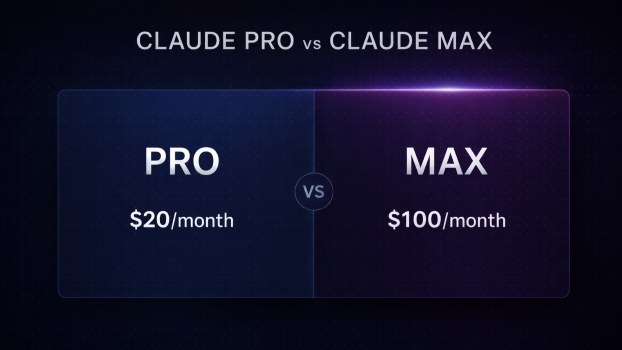
Claude Max doesn't give you a smarter model. It gives you higher throughput — more messages, longer outputs, and priority access during peak load. The underlying AI is identical across all paid plans.
Whether Max is worth it depends entirely on one thing: how fast you burn through Pro's limits.
What Actually Changes Between Plans
Most people assume Max unlocks better capabilities. It doesn't. Here's what actually differs:
| What changes | Pro | Max 5x | Max 20x |
|---|---|---|---|
| Monthly price | $20 | $100 | $200 |
| Usage ceiling | 1x baseline | ~5x | ~20x |
| Priority during peak hours | Standard | Higher | Highest |
| Model quality | Claude Sonnet 4.6 / Opus 4.6 | Same | Same |
| Features (Projects, Research, Code) | Full | Full | Full |
The model is the same. The feature set is the same. You're paying for volume and access stability — nothing else.
The Three Conditions That Determine Your Answer
Condition 1: How often do you hit limits on Pro?
- Never or rarely → Stay on Pro. Max adds nothing you currently need.
- A few times a week → You're at the edge. Max 5x will remove the friction.
- Daily, sometimes multiple times → Pro is too small for your workflow. Max 5x is the right move.
- Constantly, across multiple parallel tasks → Max 20x is worth considering.
This is the only condition that matters. If you haven't hit a Pro limit in the past two weeks, stop reading and keep your $80.
Condition 2: What are you using Claude for?
Usage limits don't deplete at the same rate across tasks. Some workflows are far more token-intensive than others.
| Use case | Token burn rate | Pro typically enough? |
|---|---|---|
| Casual writing, brainstorming | Low | Yes |
| Translation, editing, summarizing | Low–Medium | Yes |
| Long document analysis | Medium–High | Often not |
| Claude Code (coding agent) | High | Frequently not |
| Multi-file repo work, agents | Very high | Rarely |
| Daily full-time professional use | Varies | Depends on habits |
If you're running Claude Code for extended sessions or regularly feeding it large documents, Pro limits will feel tight. That's not a flaw — it's just how token consumption works at that scale.
Condition 3: How much does an interruption cost you?
A usage limit hitting during casual brainstorming is a minor annoyance. The same limit hitting mid-way through a complex coding task, a client deliverable, or a time-sensitive research session has a real cost.
If Claude is embedded in your actual work — not just occasionally useful — then access reliability has dollar value beyond the subscription price. Max doesn't eliminate limits entirely, but it pushes them far enough that interruptions stop being a recurring problem.
Condition-to-Plan Reference Table
| Your situation | Recommended plan |
|---|---|
| Light use, a few chats daily | Free or Pro |
| Regular use, haven't hit limits | Pro ($20) |
| Hit limits a few times a week | Max 5x ($100) |
| Heavy daily use, coding workflows | Max 5x ($100) |
| Full-time, parallel tasks, near-constant use | Max 20x ($200) |
| Assumed Max = smarter AI | Pro — Max won't help |
The Most Common Wrong Assumption
People who upgrade expecting better output quality from Max are going to be disappointed. The model doesn't change. If Claude's responses feel weak on Pro, that's a prompting problem, a task-fit problem, or a model selection problem. Max doesn't fix any of those.
The other mistake is jumping straight to Max 20x. Most heavy users — including full-time developers — find that Max 5x is enough. Max 20x is for edge cases: simultaneous parallel workloads, near-always-on usage, team-level throughput through a single account. If you're not sure whether you need 20x, you almost certainly don't.
A Practical Upgrade Test
Before committing to Max, run this for five to seven days on Pro:
- Use Claude the same way you normally would — don't hold back.
- Note every time you hit a limit or get a cooldown message.
- Count how many times it happened and whether it interrupted real work.
If the answer is "zero or once": keep Pro. If the answer is "several times, and it slowed me down": Max 5x makes sense. If the answer is "constantly, even during normal use": Max 5x or 20x depending on scale.
Don't upgrade based on a feeling. Upgrade based on what the test shows.
FAQ
Does Claude Max give access to better models? No. Claude Pro, Max 5x, and Max 20x all include the same models — currently Sonnet 4.6 and Opus 4.6. Model access isn't gated by plan tier above Pro.
Can I switch between Max 5x and Max 20x? Yes. Anthropic allows plan changes, and you're not locked into either Max tier.
Does Max improve account stability or reduce verification issues? No. Plan tier doesn't affect region restrictions, payment verification, or account-level policies. Those are separate from usage limits.
Is Max 5x worth it for a developer using Claude Code daily? Usually yes. Claude Code sessions consume tokens at a significantly higher rate than standard chat. Pro limits can interrupt mid-session, which is disruptive in a way that's harder to work around than a paused writing task.
What happens when you hit a Pro limit? You get a cooldown period before usage resets. The length varies. It doesn't affect your account standing — it's a rate limit, not a penalty.
Final Answer
If you hit Pro limits regularly and those interruptions slow down real work: Max 5x at $100/month.
If you're on the fence or haven't hit limits yet: stay on Pro.
If you're upgrading because you think Max is more powerful: it isn't — don't.
Max 20x is for a narrow set of users with extreme, near-constant usage. Most people who think they need it don't.
Related: Claude Supported Regions