


Feb 21, 2026 · 24-Hour AI Briefing: Tesla Cuts S/X to Double Down on Autonomy, Claude Pushes Security from “Find” to “Fix”
In the last 24 hours, two headlines highlighted the same direction: one is Tesla tightening its SKU strategy to concentrate on scalable platforms and the autonomy narrative; the other is Anthropic pushing LLMs deeper into the software delivery chain by turning security from “finding issues” into “proposing fixes.” Whether you’re building cars or shipping code, the game is shifting toward higher efficiency and tighter closed loops.
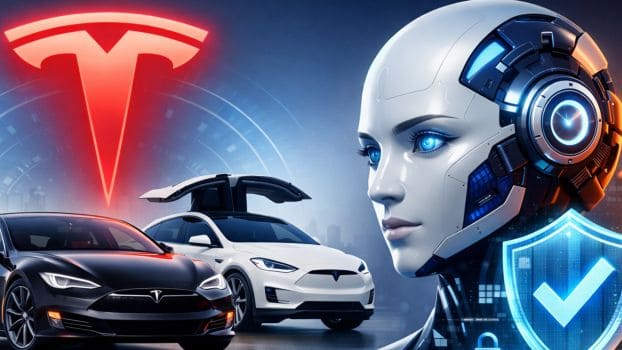
1. Tesla reportedly stops producing Model S and Model X; Musk says Tesla is focusing on the autonomous future and moving away from low-volume, high-cost models
Commentary:
Against the backdrop of Tesla’s overall deliveries declining in 2025, Model S and Model X reportedly sell only ~30,000 units per year—less than 2% of total deliveries. Compared to the million-scale volume of Model 3/Y, S/X have effectively become niche products: higher configuration complexity, more supply-chain and manufacturing overhead, and limited impact on Tesla’s total-scale cash generation. For a company obsessed with operating efficiency, the marginal return on maintaining high-complexity, low-volume SKUs keeps shrinking.
If Tesla’s roadmap is to allocate more capacity and engineering attention to higher-scale vehicle platforms—and potentially autonomy/Robotaxi-related programs—removing S/X reduces organizational complexity and concentrates R&D, procurement, and line optimization on the products that can compound cash flow. It also reinforces Tesla’s preferred framing: not a traditional automaker, but an autonomy and software-platform company.
The risk is real, though. S/X are Tesla’s premium symbols, and dropping them makes the brand more purely mass-market, which can affect high-margin options and luxury positioning. It also increases the market’s focus on autonomy execution: if FSD/Robotaxi timelines slip, narrative backlash can accelerate.
Do you agree with Tesla’s move to cut niche flagships and concentrate on scale + autonomy?
2. Anthropic launches new Claude security capability: scans codebases for vulnerabilities and generates patch suggestions for human review; cybersecurity stocks drop broadly
Commentary:
Anthropic’s “Claude Code Security” positioning—automatic vulnerability scanning plus reviewable patch suggestions—targets one of the most lucrative and most fragile parts of the security stack: closing the loop from “detect” to “remediate.” The market reaction is essentially pricing a thesis that security features are being platformized and commoditized by foundation models, forcing traditional tools and product lines to be re-priced.
Traditional SAST/DAST tools rely heavily on rules and pattern matching, which often struggles with business-logic vulnerabilities (authorization bypasses, logic flaws, state-machine bugs) and tends to produce noisy false positives and meaningful false negatives. If Claude’s approach works, its advantage is semantic understanding and contextual reasoning: not just “this looks suspicious,” but “here’s why, and here’s a concrete patch,” delivered in a form that can be reviewed in a PR. The “human review” constraint is the correct real-world posture—fully automated fixes are high-risk because regressions and new vulnerabilities are expensive.
But adoption will be gated by engineering reality: false positive/negative rates, reproducibility, regression risk, and whether it integrates cleanly into CI/CD and code review workflows. In the near term, the winning deployment model is likely “human-in-the-loop + audit logs + rollback,” not one-click auto-remediation. Longer term, security vendors won’t instantly disappear—but they’ll be pushed to shift from “tools” to “platforms,” differentiating on asset visibility, observability, governance, identity/permissions, compliance reporting, and supply-chain controls—areas that aren’t as easily absorbed by a general-purpose model.
Are you bullish on Claude Code Security as a real product wedge, or do you think it’ll plateau without deep ecosystem integration?
Most important AI events from the past 72 hours:
As Tesla compresses its lineup around scalable platforms and Anthropic tries to make AI a default component in the “security remediation” workflow, the competitive focus shifts from “shipping features” to “shipping closed loops”: whoever reduces complexity, improves delivery efficiency, and embeds capability into real workflows is likely to own the next layer of durable advantage.